

ThemeForest used to be the place. You uploaded a theme, got featured, and watched the sales roll in. For years it felt like the only real marketplace for premium WordPress products.
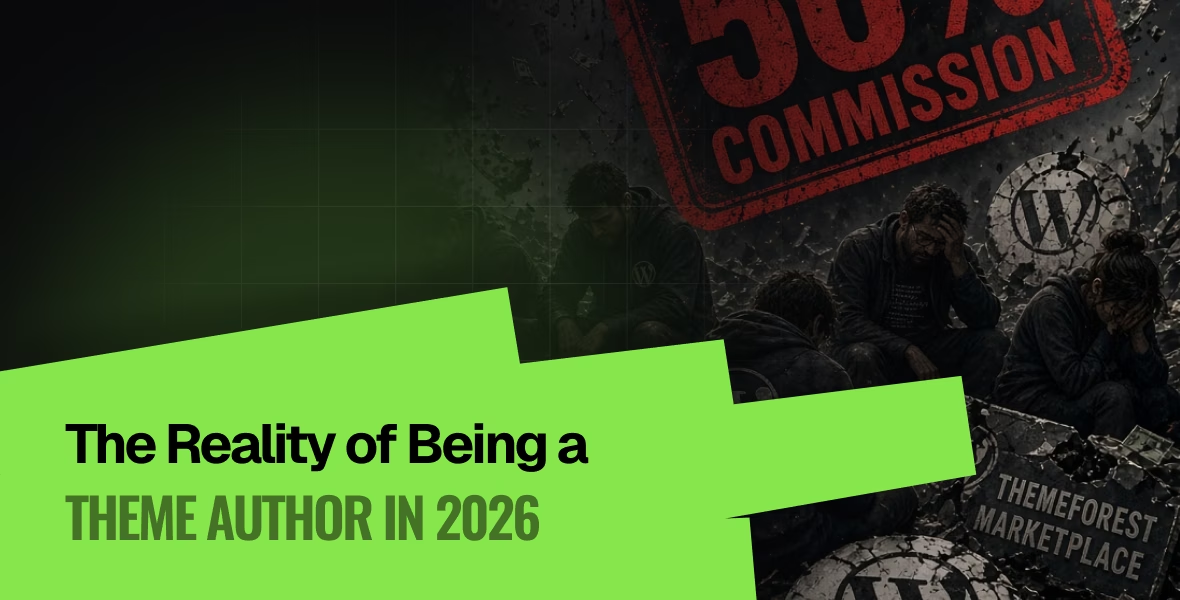
That era is ending. Not with a bang — with slow, quiet decline. And if you’re still building your entire business around ThemeForest in 2026, you’re standing on thinning ice.
The signs are impossible to ignore
- Discovery is broken. The algorithm favors old, heavily reviewed items. New themes struggle to get visibility even when they’re better.
- Buyer behavior changed. People no longer browse ThemeForest for hours. They Google, they check Twitter/X, they ask in Discords, they look at real websites.
- Support expectations exploded while the platform stayed the same. Authors burn out. Buyers get frustrated.
- The “race to the bottom” on price never stopped. $59 themes with 40 demos and lifetime updates became normal. Margins got crushed.
- Envato’s focus shifted. Elements, AI tools, stock assets — ThemeForest is no longer the crown jewel.
We’re not saying ThemeForest will disappear tomorrow. But the golden period is over. The platform that made so many of us is no longer the growth engine it once was.
So what’s actually next?
The future doesn’t belong to the biggest marketplace. It belongs to direct relationships.
Here’s what we’re seeing (and doing):
1. Own your audience
Email list > marketplace ranking. People who buy from your site once are far more likely to buy again, leave better reviews, and recommend you. Marketplace buyers are often one-time and price-sensitive.
2. Build in public
Share the process. Show the failures. Talk about the real numbers. People trust makers more than polished sales pages. This is how smaller theme shops are growing faster than big ThemeForest authors right now.
3. Fewer products, deeper quality
The era of releasing 4–5 mediocre themes a year is dying. One excellent, well-supported product with a clear point of view beats a bloated catalog.
4. Community over transactions
Discord, private communities, better documentation, real human support. Buyers are tired of ticket systems that feel like talking to a wall.
5. Multiple income streams
Themes + templates + plugins + services + education. Relying on a single marketplace is a risk almost nobody can afford anymore.
What we’re doing at VLThemes
We’re not abandoning ThemeForest completely — many of you still find us there. But we’re no longer building our future around it.
We’re investing in:
- Our own site and checkout
- Better documentation and resources
- Direct communication with customers
- Products we actually want to support for years
The goal is simple: build something that still works even if ThemeForest disappears tomorrow.
The uncomfortable truth
Most theme authors are still playing the old game. Chasing features, chasing demos, chasing the algorithm.
The ones who will still be here in 3–5 years are the ones who started treating their work like a real product business — not a marketplace listing.
ThemeForest gave a lot of us our start. We’re grateful for that. But gratitude doesn’t pay the bills in 2028.
The next chapter belongs to those who own the relationship with their customers.
What do you think? Are you still all-in on ThemeForest, or are you already building something outside of it? Drop your thoughts below.




Comments
No comments yet. Start the conversation.